
Last updated: September 2026
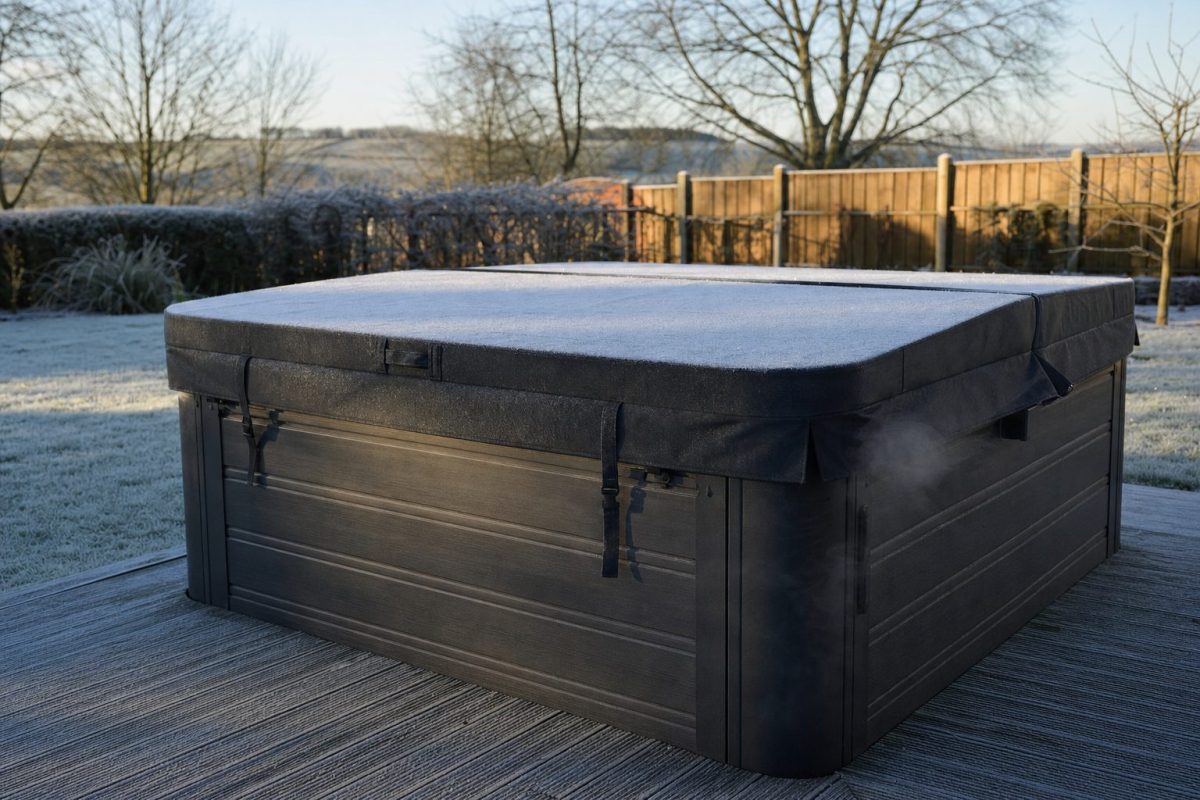
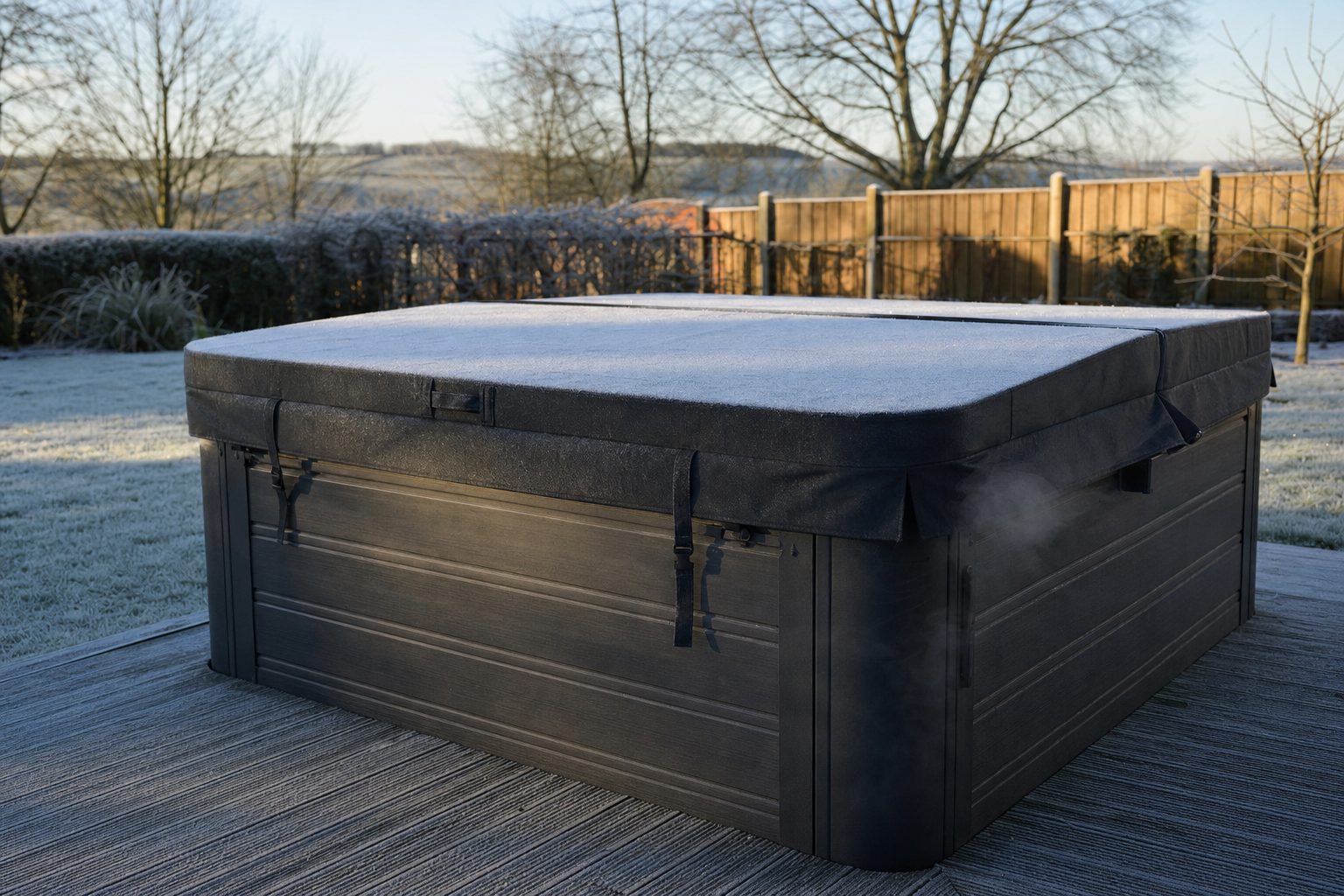
It’s getting to that time of year again. Summer seems a distant memory, the trees are changing colour and the temperature has dropped. For me, this is when my hot tub really comes to life. I love being outside, and it makes the garden usable for so much longer. We use ours all year round.
But not everyone does, and where you live makes a big difference. A British winter of wet, grey days hovering around freezing is a very different beast from a Minnesota winter at -20°C (-4°F). So this guide covers both options: keeping it running safely, and shutting it down properly.
The short version
- If you’ll use it, keep it running. A full, running, covered hot tub protects itself from freezing. That’s the usual approach in the UK and in milder US climates.
- A half-winterized tub is the worst of both worlds. Either keep it full and running, or drain it completely. Never leave it full and switched off in freezing weather.
- Shutting down in a cold climate? Drain it, open the unions, blow or vacuum every drop out of the lines, dry the filters and cover, and if your manufacturer recommends it, use non-toxic propylene glycol antifreeze. Never use car antifreeze.
- Keeping it running? Keep the cover on and strapped, the water level up and the chemistry balanced, and have a plan for power cuts.
- In-ground DIY tub? Think twice about leaving it empty. Groundwater pressure can lift or crack an empty shell, which is why a hydrostatic relief valve matters.
Keep it running or shut it down?
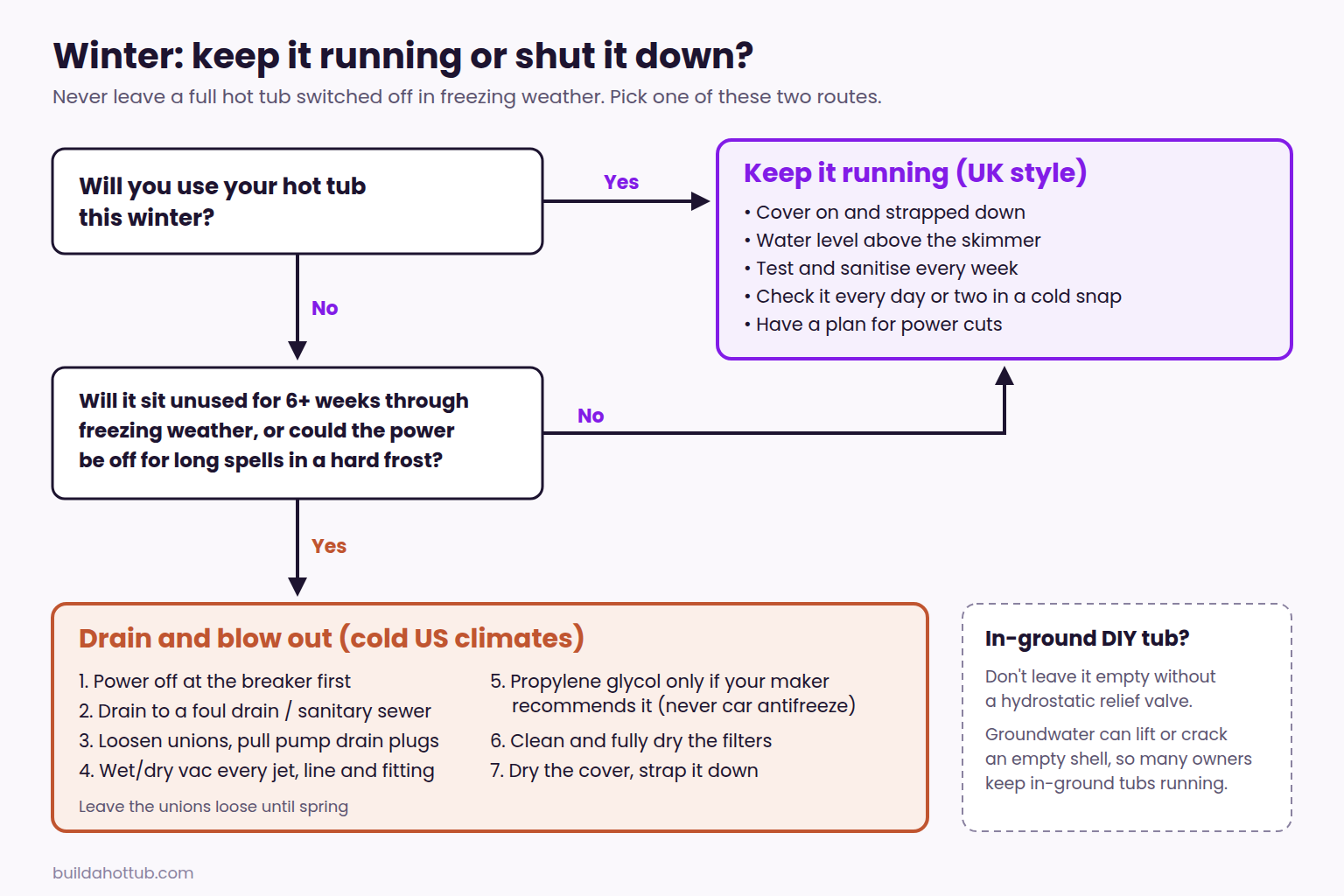
This is the first decision, and it’s simpler than it sounds.
| Keep it running (UK style) | Drain and blow out (cold US climates) | |
|---|---|---|
| Best for | You’ll use it over winter, or frosts are short and mild | It’ll sit unused for weeks through hard freezes (a holiday home, say, or you’re away all winter) |
| Freeze protection | Moving, heated water. Most spa packs run the pumps automatically when the water gets cold | No water left to freeze |
| Main risk | A long power cut or equipment failure in a hard frost | Water left trapped in a pump, heater or low pipe, which then freezes and cracks it |
| Cost | Higher winter electricity bills | No running cost, but a refill and fresh chemicals in spring |
| Effort | Weekly checks | One careful afternoon, then a spring start-up |
Even manufacturers say you don’t have to winterize if you’ll use the tub. Bullfrog Spas, for example, only recommends winterizing if the spa will be left unattended for six weeks or more. What you must never do is switch it off and leave it full in freezing weather. That’s how pumps and heaters get split.
Option 1: Keeping your hot tub running through winter
This is what I do, and it’s what a lot of UK owners do. A full hot tub with the power on, circulating and heating, looks after itself remarkably well. Most control systems have built-in freeze protection. Balboa’s manual, for example, says that if the heater’s temperature sensors detect a low enough temperature, the pumps and blower switch on automatically. But that only works if the power’s on and the water’s there.
Winter checklist
- Keep the cover on and strapped down whenever you’re not in it. It’s your biggest defence against both freezing and your electricity bill. Brush snow off with a soft brush rather than letting it pile up, and don’t chip at ice on the cover with anything sharp. There’s more in my ultimate guide to hot tub covers.
- Check the cover is in good shape before winter. A waterlogged, sagging cover lets heat out and can let the water freeze at the surface. See hot tub cover maintenance.
- Keep the water level up. If it drops below the skimmer, the pumps can suck air and stop circulating, and then there’s no freeze protection.
- Keep the chemistry balanced. You might use it less, but the water still needs testing and sanitising every week.
- Clean the filter regularly. A clogged filter reduces flow, and poor flow can stop the heater. See how to clean a hot tub filter cartridge.
- Check it every day or two in a cold snap. Lift the cover, check it’s warm and circulating, and check the topside for error codes.
- Think about economy settings, carefully. Dropping the set temperature a few degrees when you’re not using it can save money. But if you use a mode that only heats during filter cycles (Balboa’s “Rest” mode, for example), make sure the filter cycles run often enough in cold weather. I explain the modes in Balboa heat modes explained.
Heat pumps in winter
If you heat with an air source heat pump, expect it to work harder and defrost more often as the air gets colder. I tested mine in sub-zero weather, and you can see how it coped in I ran my air source at -4°C: the results. Many setups keep the spa pack’s electric heater as a backup for the coldest days. If your heat pump is struggling or iced up, see Help! My air source heat pump is not heating my hot tub.
What if there’s a power cut?
This is the main risk of the “keep it running” approach, and it’s worth having a plan before it happens.
- Keep the cover on and closed. A full, well-insulated tub holds its heat for a good while, and a big volume of warm water doesn’t freeze quickly.
- When the power comes back, check it’s running. Some systems need a reset, or show an error after a power cut. If the breaker keeps tripping, see the ultimate troubleshooting guide to hot tub breaker tripping.
- If the power will be off for a long time in a hard frost, the equipment and exposed pipework are most at risk, because they hold small volumes of water. In that situation, draining down (Option 2) is safer than hoping.
Option 2: Fully winterizing (drain and blow out)
If you’re shutting down for winter somewhere that gets proper freezes, the aim is simple: no water left anywhere that can freeze. The tub itself is the easy bit. It’s the pumps, the heater and the low points in the pipework that catch people out.
1. Plan where the water’s going
A typical hot tub holds around 1,500 litres (400 US gallons), so that’s a lot of water to get rid of. Chlorine, bromine and salt are all harmful to wildlife and waterways, so don’t send them down a road drain. The US EPA recommends draining to the sanitary sewer, or dechlorinating it first if it’s going anywhere else. Some cities, such as Portland, have strict rules on this, so check yours. In the UK, use a foul drain (the kind your sink or toilet goes to), not a surface water gully, because surface water drains are meant for clean, uncontaminated water and often run straight to a stream.
If you’d like to use the water on the garden, leave the cover off for a few days so the chlorine drops to zero before you drain it. Test it first. Personally, I don’t. I pump mine away down the drain, but that’s personal preference.
2. Turn off the power
Kill the power at the isolator or breaker before you start draining. You don’t want a filter cycle or freeze protection kicking in and running the pumps dry halfway through.
3. Drain the tub
Connect a hose to the drain spout if your tub has one. Gravity alone can be slow, so a cheap submersible pump from the hardware store speeds things up a lot. That’s how I drain my own. Most submersible pumps leave a couple of inches in the bottom that they can’t reach. You can take that out with a wet vac, or sponge it out, which is what I usually do. If you remove any drain plugs, put them somewhere safe. You can buy replacements, but save yourself the hassle.
My full routine is in How to drain and clean your hot tub.
4. Open up the equipment and get the water out of the lines
This is the step that really matters in a cold climate.
- Open the equipment bay. You may need a screwdriver for the access panel.
- Loosen the unions on each pump and on the heater, and remove any drain plugs on the pump wet ends, so the water trapped inside can run out. Leave them loose over winter, so there’s somewhere for any water that collects to go.
- Blow or vacuum out the lines. Use a wet/dry vac, on blow or suck, on every jet, the filter housing, the skimmer and the suction fittings. You’ll be surprised how much water comes out of lines you thought were empty. Do it again until you get nothing but air.
- Don’t forget the blower. If your tub has an air blower, run it briefly with the tub empty to clear water from the air channels (only if your manual allows this with the tub drained).
Some manufacturers then recommend adding non-toxic propylene glycol (RV or plumbing antifreeze) to the lines as a belt-and-braces measure. Bullfrog, for example, suggests pouring it into the filter housing. Never use ethylene glycol car antifreeze, which is toxic. Follow your manufacturer’s instructions, because not all of them recommend antifreeze, and flush it out thoroughly before you refill in spring.
5. Clean and dry the filter
Take the filter cartridges out, clean them properly, and let them dry completely before storing them somewhere indoors. Put one back wet and leave it, and it’ll be green and full of mould when you open the tub up in spring. Not nice!
6. Clean the shell
It’ll be the fastest clean you’ve ever given your tub. It’s so much easier with no water in the way. Use a non-abrasive sponge and a proper spa surface cleaner. Dry it off afterwards, as you don’t want water sitting in the footwell to freeze.
7. Clean, dry and secure the cover
Don’t forget the cover. Clean the top and underside, and make sure the underside is completely dry before you close it down for winter. The last thing you want is to scrub mould off the inside in spring. Strap it down, and in heavy-snow areas consider a board or support underneath so it doesn’t sag under the weight of snow. My guide to removing hot tub cover stains helps if it needs a proper clean.
DIY and in-ground hot tubs: extra things to think about
- Don’t leave an in-ground tub empty for long without a hydrostatic relief valve. A high water table (and winter is when it’s highest) can push up on an empty shell hard enough to lift or crack it. See Why do I need a hydrostatic relief valve? This is one reason many in-ground owners keep their tubs full and running all winter.
- Look after the control room. Exposed pipework and equipment are the parts most likely to freeze. Insulate the control room, and keep pipe runs short and lagged. If it’s below the waterline, draining the lines fully is much harder, so keeping the tub running is usually the safer choice. There’s more in hot tub control room design considerations.
- Design drain points in. If you’re still planning your build and live somewhere cold, put drain-down points at the low spots of your plumbing so winterizing is easy. It’s far simpler to do at the design stage.
Spring start-up
When you’re ready to use it again: tighten the unions and refit the drain plugs, put the filters back in, and flush out any antifreeze. Then fill it the right way (How to fill a hot tub with water, the correct way), check for leaks, and balance the water from scratch. My hot tub setup guide walks through the start-up in order. If the jets won’t flow, it’s almost always an air lock (see How to deal with a hot tub air lock).
Common winterizing mistakes
- Switching off a full tub for the winter “to save money”.
- Draining the tub but not the pumps, heater and pipework.
- Using car antifreeze (ethylene glycol) instead of non-toxic propylene glycol, or not flushing it out in spring.
- Putting a wet filter back in, or closing a wet cover.
- Letting the water level drop below the skimmer on a running tub.
- Emptying an in-ground tub with no hydrostatic relief valve when the water table is high.
Need parts or planning a build?
If a winter freeze has already cracked a union or a pump wet end, you’ll find replacements at parts4tubs.co.uk in the UK and parts4tubs.com in the USA. If you’re planning your own tub and live somewhere cold, my DIY hot tub plans and The Ultimate Hot Tub Control Room Guide will help you get the insulation, drain points and equipment layout right from the start.

FAQs
Do I need to winterize my hot tub?
Not if you’ll keep using it. A full, running, covered hot tub protects itself from freezing. You only need to fully winterize if it’ll sit unused for weeks through freezing weather.
Can I just turn my hot tub off for the winter?
Not if it’s full. Water left standing in the pumps, heater and pipes can freeze and crack them. Either keep it running, or drain it completely and blow out the lines.
Should I put antifreeze in my hot tub?
Only if your manufacturer recommends it, and only non-toxic propylene glycol (RV or plumbing antifreeze), never car antifreeze. Flush it out thoroughly before refilling.
How cold is too cold for a hot tub?
A properly insulated, covered hot tub that’s running will cope with well below freezing. The danger comes when the power’s off or circulation stops. Inflatable tubs are more vulnerable. Lay-Z-Spa, for example, warns that if an unused tub is left out when temperatures drop below 4°C, water could freeze in the pump.
What should I do if my hot tub freezes?
Turn the power off, so pumps don’t try to run against ice. Then thaw it slowly by keeping the cover on and warming the equipment bay gently, for example with a fan heater placed safely outside the cabinet. Don’t pour boiling water on pipes. Once it’s thawed, check carefully for cracked unions, pump housings and heater tubes before powering back up.
Do you keep yours running over winter or shut it down? Tell me in the comments below. I read them all.
Cheers,
Andi
You can also find me on my socials;






looking for hot tub & pool parts?
I have everything you need....
If you are looking for Hot Tub & Swimming Pool Parts, either for your DIY Hot Tub, plunge pool or swim spa build, or you are looking for parts to repair your pool or hot tub - then check out my USA & UK stores below.
I carry 30K+ product lines across the stores

Can I Help You?
If I can help you in any way I would love to hear from you. You can get in touch using the form below.
Thanks - Andi
 Hi, Andi here. I own Buildahottub.com and also write all of the articles and info pages on the site. Some years back now, I built my own hot tub but struggled to find the information I needed. So, once my tub was complete, I started this website to help others in their own pursuit of hot tub and plunge pools DIY building information.
Fast forward to 2025, I've helped over 1400+ DIY customers just like you all over the world build hot tubs and pools. Have a good look around the site, there are lots of resources here. Please do get in touch if I can help you. - Cheers, Andi
Plunge Pool and Hot Tub Combo: How to Design One Project That Does Both
Can you have a hot tub and a plunge pool in one project? Yes. Here [...]
Sep
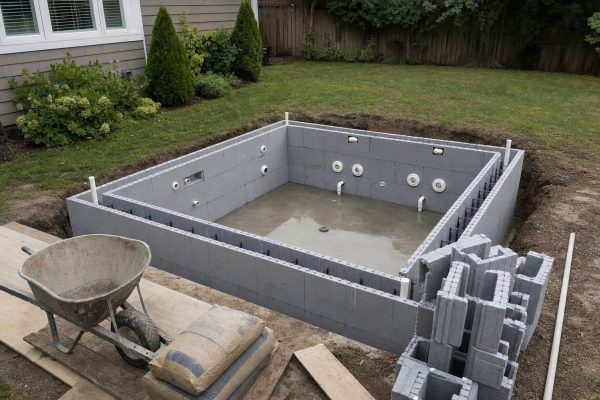
DIY Hot Tub Cost Breakdown for 2026: Where the Money Actually Goes
What does a DIY hot tub cost in 2026? A line-by-line breakdown of an 8ft [...]
Sep

Can a Self-Confessed Rubbish DIYer Build a Hot Tub? Meet Matt
his might just be the biggest challenge my DIY hot tub plans have ever faced. [...]
Jun
What I’d Change If I Built My DIY Hot Tub Again
Four things I'd do differently if I built my DIY hot tub again: ICF, a [...]
May
Out With the Cedar, In With an ICF Inground Hot Tub
Right, I've got a brand new project to introduce to the channel today – and [...]
Apr
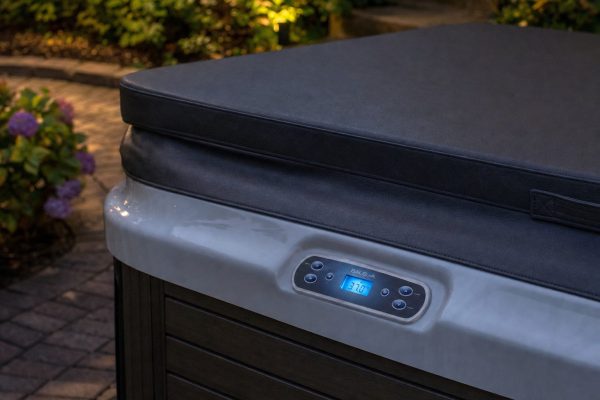
Balboa Heat Modes Explained: Ready, Rest, Economy and Sleep
Ready, Rest, Economy, Sleep: what each Balboa heat mode does, how to switch between them [...]
Mar
How to Change an Air Button and Latching Relay on a Hot Tub or Pool
Air buttons and latching relays are cheap and easy to replace. Here is how they [...]
Mar
How to Choose the Right Air Source Heat Pump for Your Hot Tub or Pool
Five things to check before buying an air source heat pump for your hot tub [...]
Mar