
Updated September 2026. My answer hasn’t changed. I’ve added the temperature limits liner manufacturers publish (which a hot tub goes well over), a comparison of the alternatives, and what I’d use instead today.
Liners have been used in swimming pools for decades. They’re certainly nothing new. So it’s no surprise that one of the questions I get asked most is whether you can put a liner in a DIY hot tub instead of rendering, waterproofing and tiling it. It looks quicker and cheaper. In this post I’ll give you my honest answer, and explain why.
The short version
- Technically yes, but I really don’t recommend it. The one liner project I was involved in was a constant battle.
- Heat is a problem. Liner makers quote maximum water temperatures of around 30–32°C (86–90°F). A hot tub runs at up to 40°C (104°F).
- Fittings are the bigger problem. Hot tub jets are made to seal onto an acrylic shell or be cast into concrete. None are made to clamp a liner, and you need 16 or more holes.
- Fitting a liner flat is hard, even in a small tub. Pool installers use vacuum equipment.
- What I’d do instead: render, a pool-rated waterproofing membrane, a flood test, then tiles.
What is a liner?
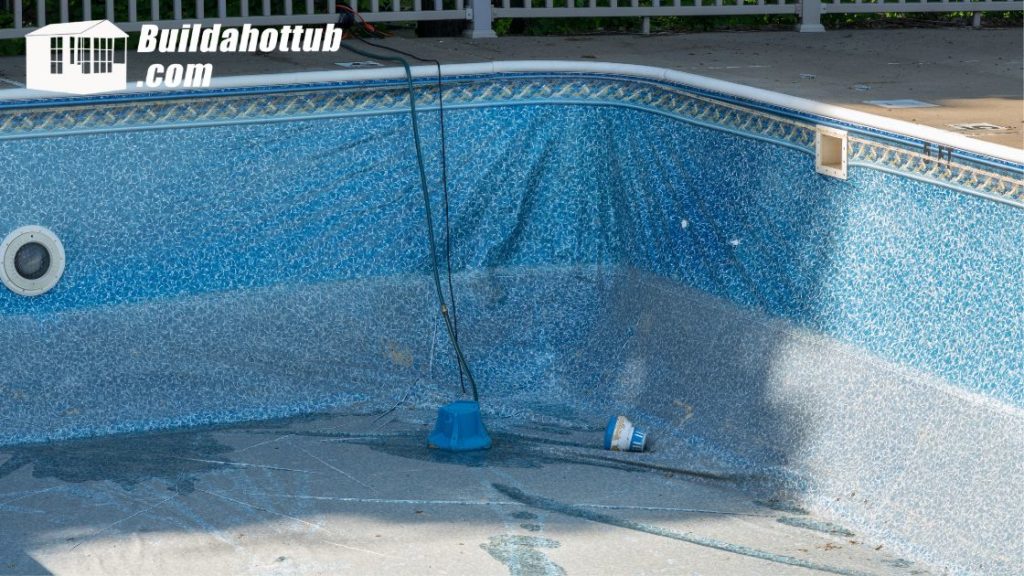
A pool liner is a vinyl (PVC) sheet made to fit the walls and floor of a pool. It holds the water in, gives a smooth, comfortable surface and makes the pool look nice. There are two main types: the printed vinyl liners you’ll see in lots of kit pools in the USA, and the thicker reinforced PVC membranes common in Europe, which are welded in place by an installer.
I’ve been in plenty of vinyl-lined pools and they’re great. They’re much quicker to put in than tiles, but they don’t last as long and they need replacing every so often. They’re also hard to fit well. You want a pool professional with the right suction equipment to pull the liner tight against the walls. Notice that the product is called a swimming pool liner. Nobody makes a hot tub liner, and there’s a reason for that.
The short answer
Yes, you can, but it’s really not advisable, and it’s not a project I’d want to get involved with again. Here’s why.
My experience with a hot tub liner
My own experience with hot tub liners is limited to one project. To be totally honest, that was enough. My customer Brandon built a wood-framed hot tub and used a PVC pool liner inside it.
His project seemed to go on for ages. We were forever trying new things, different techniques and new products. He got there in the end, but he spent a fortune on replacement parts and hundreds of hours trying to make it work. On top of that there was the stress, and the constant disappointment of the “next solution” not working. As Brandon found, even getting the liner to sit flat was really difficult, and that was on a small tub.
The conclusion was simple. Brandon said he’d never attempt another DIY hot tub with a liner, and I agreed. From that project on, when people ask me whether it’s possible, my answer is no. Technically you can get it to work, but it isn’t worth the hassle.
Problem 1: hot tub temperatures
This is something I didn’t cover when I first wrote this post, and it’s worth knowing before you buy anything. Liner materials are designed for swimming pool temperatures, not hot tub temperatures:
- Canadian General Tower (CGT), who make vinyl pool liners and membranes, say 30°C (86°F) is the maximum recommended water temperature for vinyl liners. Hotter water speeds up chlorine attack on the liner and makes wrinkling more likely.
- RENOLIT, who make the Alkorplan reinforced pool membranes, give a maximum operating temperature of 32°C, or up to 35°C with proper pre-tensioning during installation.
- A hot tub typically runs at 37–40°C (99–104°F). The US Consumer Product Safety Commission says hot tub water should never exceed 104°F (40°C), so that’s the top end, not the norm.
So a liner in a hot tub will be running several degrees above what its maker designed it for, all the time, in sanitised water. Expect wrinkles, softening and a shorter life, and read the warranty terms carefully before you rely on them.
Problem 2: fittings and parts supply
Even if you ignore the difficulty of fitting a liner properly, which is an issue in itself, the biggest practical problem is parts.
There are really two types of hot tub jet. There are jets designed for acrylic shell hot tubs, which clamp through a thin shell with a gasket, and gunite jet bodies designed to be cast into concrete or block-built tubs. Nothing is designed for a liner hot tub. You can get a skimmer, because that’s a pool part. But any suction fittings made for liner pools are pool-grade, and the flow rates are too low for hot tub jet pumps. There’s more on this in Can I use pool parts on a hot tub?
Now think about how many holes you need through the liner for the jets and suctions. On a standard hot tub, it’s at least 16–18. That’s 16–18 potential leak points, and it’s exactly the problem Brandon had.
We were trying to use jet bodies designed to seal onto a rigid plastic shell with a gasket, not onto a flexible liner. It was extremely difficult to get enough tension on the jet to hold the liner in place and stop it leaking. It would move or pull loose, and you’d end up with water outside the tub or, worse still, behind the liner. It was the same with every glue or sealant we tried.
What are the alternatives to a hot tub liner?
| Finish | Pros | Cons | My verdict |
|---|---|---|---|
| Tiles over render and a pool membrane | Durable, looks great, works with standard gunite jet bodies, handles hot water | Costs more and takes longer | What I recommend |
| Render and membrane, then pool paint | Cheaper than tiles, still a proper waterproofing system | Needs repainting. Check the paint is rated for spa temperatures | A good budget option |
| Vinyl or PVC liner | Quick in a pool | Above its rated temperature, no suitable jet fittings, hard to fit | Avoid for a hot tub |
| A ready-made shell (stock tank, acrylic) | The vessel is already waterproof | Limited sizes and shapes | Great if one fits your plans |
Tiles on a proper waterproofing system
I’d always recommend tiles. They’re durable and they look great. When I first wrote this, I said tiles also add a waterproofing layer. Tiles and cement grout aren’t actually waterproof, though. What keeps the water in is the membrane underneath. So today the system is:
- Render the walls (a scratch coat and a float coat) to give a flat, sound surface.
- Apply a pool-rated waterproofing membrane in two coats, such as Ardex S 7 Plus in the UK and Europe or Laticrete Hydro Ban in the USA.
- Flood test before you tile. The full build-up, from the slab up, is in my DIY in-ground hot tub build guide.
- Tile with a flexible, pool-grade adhesive. See Hot tub tiles and Waterproofing, grout and tile adhesive.
Render and paint
If the cost of tiles is prohibitive, you can finish the render and membrane with a pool paint (I originally suggested a swimming pool grade or epoxy paint). Just check the product’s data sheet says it’s suitable for heated spas and your sanitiser. Many are designed for swimming pool temperatures only.
Start with a vessel that’s already waterproof
If you like the idea of a quick, liner-style build, look at a stock tank hot tub. The galvanised or poly tank is already watertight, and you just fit the plumbing. A traditional round wooden hot tub seals itself as the staves swell. Or, if you’re restoring an old acrylic spa, see Restoring or repairing a hot tub or spa.
Conclusion
Whilst it’s technically possible to use a liner in a hot tub, you’ll spend so much time fixing leaks and “messing with parts” that you might as well conclude it isn’t possible. I’d highly recommend building your tub in a way that’s easier, less of a headache, and more durable in the long run. It might take a bit longer and cost a little more, but it’s worth it. Stress-free DIY is what we’re after, and liners = stress!
Planning your own build?
My DIY hot tub plans are for block or ICF tubs finished with render, a membrane and tiles, the way I’d build one today. They include CAD drawings, the plumbing layout, a shopping list and a video course. If you’d rather go the stock tank route, there are complete stock tank plumbing kits with everything but the tank and pipe.

FAQs
Can you put a pool liner in a hot tub?
Technically yes, but vinyl and PVC pool liners are rated for about 30–32°C (86–90°F), a hot tub runs at up to 40°C (104°F), and there are no jet fittings designed to seal through a liner. I don’t recommend it.
Can I use a pond liner in a DIY hot tub?
Pond liners are made for ponds, not hot, sanitised water. You’d still have the same problem of sealing 16 or more jet and suction fittings through a flexible sheet. Use a proper waterproofing membrane under tiles instead.
What about a liner in a cold plunge pool?
Temperature isn’t an issue in a cold plunge, and with fewer fittings (no jets) a liner is more workable. It still needs to be fitted properly, and it’ll need replacing at some point. See How to build a DIY cold plunge pool.
What is the best waterproof finish for a concrete or block hot tub?
Render, then a pool-rated cementitious or liquid membrane in two coats, then a flood test, then tiles on a flexible pool-grade adhesive.
Are hot tub liners cheaper than tiles?
Up front, often yes. But once you count the specialist fitting, the leaks and an early replacement from running above its rated temperature, it’s rarely cheaper in the long run.
Have you tried a liner, or are you weighing it up? Tell me about it in the comments below. I read them all.
Cheers,
Andi
You can also find me on my socials;






looking for hot tub & pool parts?
I have everything you need....
If you are looking for Hot Tub & Swimming Pool Parts, either for your DIY Hot Tub, plunge pool or swim spa build, or you are looking for parts to repair your pool or hot tub - then check out my USA & UK stores below.
I carry 30K+ product lines across the stores

Can I Help You?
If I can help you in any way I would love to hear from you. You can get in touch using the form below.
Thanks - Andi
 Hi, Andi here. I own Buildahottub.com and also write all of the articles and info pages on the site. Some years back now, I built my own hot tub but struggled to find the information I needed. So, once my tub was complete, I started this website to help others in their own pursuit of hot tub and plunge pools DIY building information.
Fast forward to 2025, I've helped over 1400+ DIY customers just like you all over the world build hot tubs and pools. Have a good look around the site, there are lots of resources here. Please do get in touch if I can help you. - Cheers, Andi
DIY Hot Tub Cost Breakdown for 2026: Where the Money Actually Goes
What does a DIY hot tub cost in 2026? A line-by-line breakdown of an 8ft [...]
Sep
Can a Self-Confessed Rubbish DIYer Build a Hot Tub? Meet Matt
his might just be the biggest challenge my DIY hot tub plans have ever faced. [...]
Jun
What I’d Change If I Built My DIY Hot Tub Again
Around eight years ago, I built my own DIY hot tub. You've probably seen it [...]
May
Out With the Cedar, In With an ICF Inground Hot Tub
Right, I've got a brand new project to introduce to the channel today – and [...]
Apr
Balboa Heat Modes Explained: Ready, Rest, Economy and Sleep — What They Actually Mean
If you've got a Balboa-controlled hot tub and you're not sure what all those heating [...]
Mar
How to Change an Air Button and Latching Relay on a Hot Tub, Pool or Spa Bath
If you've got an air button that's stopped working, or a latching relay that's given [...]
Mar
How to Choose the Right Air Source Heat Pump for Your Hot Tub or Pool
With so many air source heat pumps on the market right now, choosing the right [...]
Mar
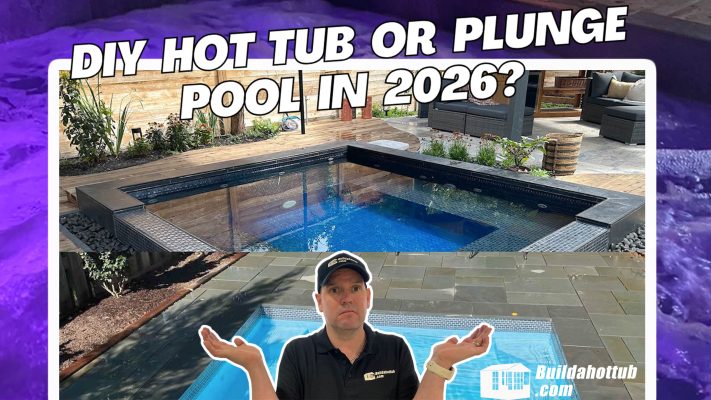
Hot Tub vs Plunge Pool – Which Should You Build in 2026?
Right, this is one of those questions that lands in my inbox on an almost [...]
Mar