

Last updated: September 2026
Not every hot tub I design is square, and this one certainly isn’t. It’s an octagon hot tub!
This is a project I worked on with Marshall in California. Like a lot of my customers, Marshall knew exactly what he wanted to build, but he wasn’t sure about the plumbing side of things. He’d been following my blog and YouTube channel for some time, but he still needed a little “push” in the right direction to feel comfortable getting started. That’s normal!
Marshall’s build at a glance
- Where: California, USA.
- The design: an above-ground octagon tub with poured concrete walls, drawn up by Marshall himself.
- My part: a 3D plumbing layout, plus all the plumbing parts.
- The build: a hand-mixed, reinforced concrete pad, then formed and poured walls with insulation and the through-wall plumbing cast in.
- The plumbing: a two-pump system (circulation and jets), with the control room below the tub’s water line.
Initial contact
Marshall got in touch and explained exactly what he was looking to do. He’d drawn up the plans (below), and as you can see, they were structurally sound and the layout was good. What he really needed my help with was the plumbing.

So Marshall hired me to consult on his plumbing layout and draw it up. What’s great about the 3D layouts is that you can follow what connects to where, a bit like Lego! If you want to understand the principles first, start with how hot tub plumbing works.
Parts supply
Marshall also chose to have me supply all the plumbing parts he needed. That way, not only could I help with some free consulting on the build, but I also knew that everything he had would fit together, and if he followed the plan, it would work. I know all the kit really well, so troubleshooting is much easier if things don’t quite go to plan.

Breaking ground
This is where the fun begins. Marshall and a couple of friends marked out where the tub was going and started to break ground. This is an above-ground tub, so there wasn’t much digging to do, just enough to form up a concrete pad to build the tub on. (If you’re weighing up the options, see above-ground hot tubs and in-ground hot tubs.)

With the ground clear, it was time for Marshall and the team to add the rebar for the concrete. This gives it strength. You can also see that the rebar doesn’t sit on the ground. It’s lifted up so that it ends up in the middle of the concrete. My guides to rebar and building a concrete slab for a hot tub go into more detail.

Next, it was time to pour some concrete. Marshall and the team mixed it by hand, but they made light work of it.


Forming and pouring the walls
This tub has poured concrete walls, so the next stage was to build the forms, which are really a large wooden mould that the concrete is poured into. For how this compares with block and ICF, see hot tub wall construction: what are the options?


In the image above you can see they also added insulation inside the forms, plus the plumbing (well, the through-wall plumbing). There’s more on insulating a build in my DIY hot tub insulation guide.
The next stage was to pour the walls. After the concrete had cured (normally 5–7 days), the forms came off, and wow, how good does this look already!

And… that view.

Next, Marshall moved on to the interior. You can see the seats starting to go in here.

Update: plumbing progress
Here’s a quick update on Marshall’s octagon hot tub. Remember in the last video we saw the walls all formed up? This time it’s all about getting the plumbing installed, which is pretty exciting if you ask me. Here are the takeaways from the video:
- The control room sits below the water line. This might seem odd at first, but it’s because of the pumps Marshall is using. Standard spa pumps are centrifugal pumps that aren’t self-priming, so they need the water to flow to them by gravity rather than having to lift it. If your equipment has to sit above the water line, read using a priming circuit on a centrifugal hot tub pump and the self-priming pump options.
- Two pumps, two jobs. Marshall is installing a two-pump system. One pump keeps the water circulating and clean, and the other is a jet pump just for the massage jets. See how many pumps you need for a DIY hot tub.
- Short runs for strong jets. Instead of one continuous loop of pipe around the tub, the jets are fed by shorter sections that end at the last jet. It’s all to make sure the jets get enough pressure.
- Getting ready for tiles. The coping tiles are in place, and Marshall is prepping the surface for the top row of tiles. The floor of the tub will be either tiled or painted. That decision hadn’t been made yet.
What’s next? Marshall still has to get all the tiles on, fill the tub and then comes the best part: testing it all out. If you’re thinking about your own tiles, see choosing hot tub tiles and waterproofing, grout and tile adhesive.
Latest updates
Planning something other than a square?
An octagon, a circle or anything with angles is where a proper plumbing layout really earns its keep. Sketch your shape in the free Tub & Pool Designer Pro software, and I can turn it into architectural CAD and a 3D plumbing design, like Marshall’s. If a standard size suits your backyard, my DIY hot tub plans include the CAD drawings, plumbing layout, parts list and video course.
What do you think of Marshall’s octagon? Let me know in the comments below. I read them all.
Cheers,
Andi
You can also find me on my socials;






looking for hot tub & pool parts?
I have everything you need....
If you are looking for Hot Tub & Swimming Pool Parts, either for your DIY Hot Tub, plunge pool or swim spa build, or you are looking for parts to repair your pool or hot tub - then check out my USA & UK stores below.
I carry 30K+ product lines across the stores

Can I Help You?
If I can help you in any way I would love to hear from you. You can get in touch using the form below.
Thanks - Andi
 Hi, Andi here. I own Buildahottub.com and also write all of the articles and info pages on the site. Some years back now, I built my own hot tub but struggled to find the information I needed. So, once my tub was complete, I started this website to help others in their own pursuit of hot tub and plunge pools DIY building information.
Fast forward to 2025, I've helped over 1400+ DIY customers just like you all over the world build hot tubs and pools. Have a good look around the site, there are lots of resources here. Please do get in touch if I can help you. - Cheers, Andi
Hot Tub Seats, Benches and Loungers: How to Build Them Comfortable
Hot tub seats are what you touch every time you get in. Here are the [...]
Nov
The 8ft x 8ft Hot Tub: Why It’s the Most Popular DIY Size
The 8x8 hot tub is the size I sell more plans for than any other. [...]
Nov
How Big Should Your Hot Tub Be? Sizes, Seating and Water Volume Explained
How big should your hot tub be? A practical guide to hot tub sizes for [...]
Nov
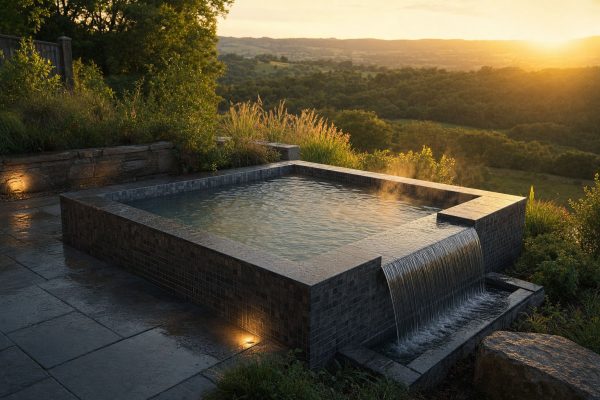
Infinity Hot Tub Cost: What the Overflow Edge Really Adds
What does an infinity edge really add to a DIY hot tub? A 2026 breakdown [...]
Oct
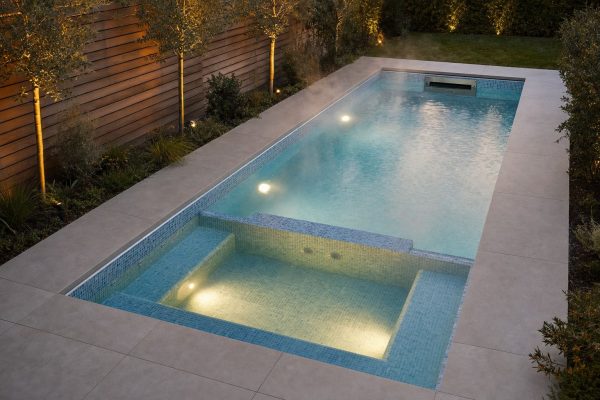
Swim Spa Sizes: How Long and Deep Does a DIY Swim Spa Need to Be?
How big should a DIY swim spa be? The minimum length for a swim jet, [...]
Oct
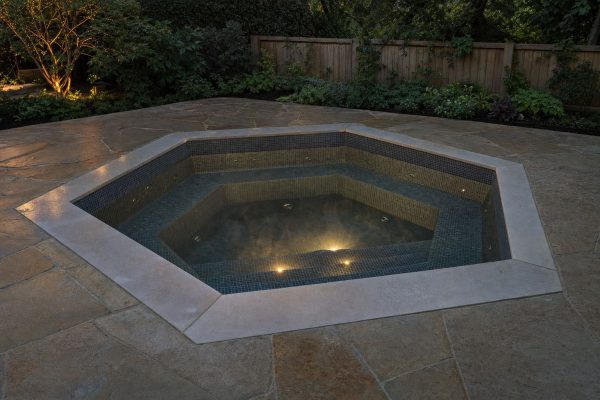
Hexagon, Round or Rectangle? Choosing a Shape for Your DIY Hot Tub
Square, round, hexagon or octagon? How each hot tub shape affects seating, water volume, the [...]
Oct
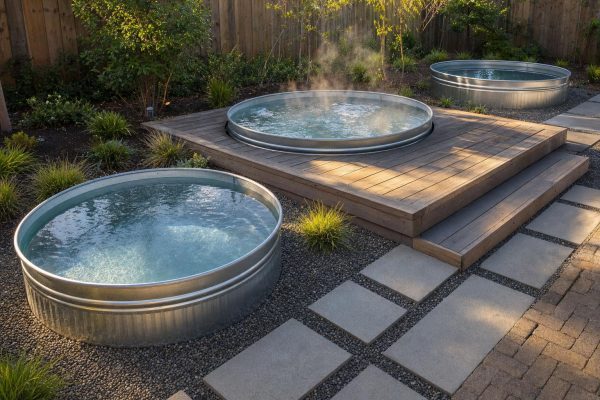
Stock Tank Sizes: Which Tank Makes the Best Hot Tub or Plunge Pool?
Stock tank sizes explained: 6ft, 8ft and 10ft round, oval and poly tanks, how much [...]
Oct
Cocktail Pool Cost in 2026: What a DIY Build Really Costs
What does a cocktail pool really cost to build yourself in 2026? A line-by-line budget [...]
Oct